Castles, abbeys, forests, islands
The honour is a map. Stone, greenwood, a Cistercian nave, a Lancashire priory, and a kingdom in the Irish Sea. Open any seat.
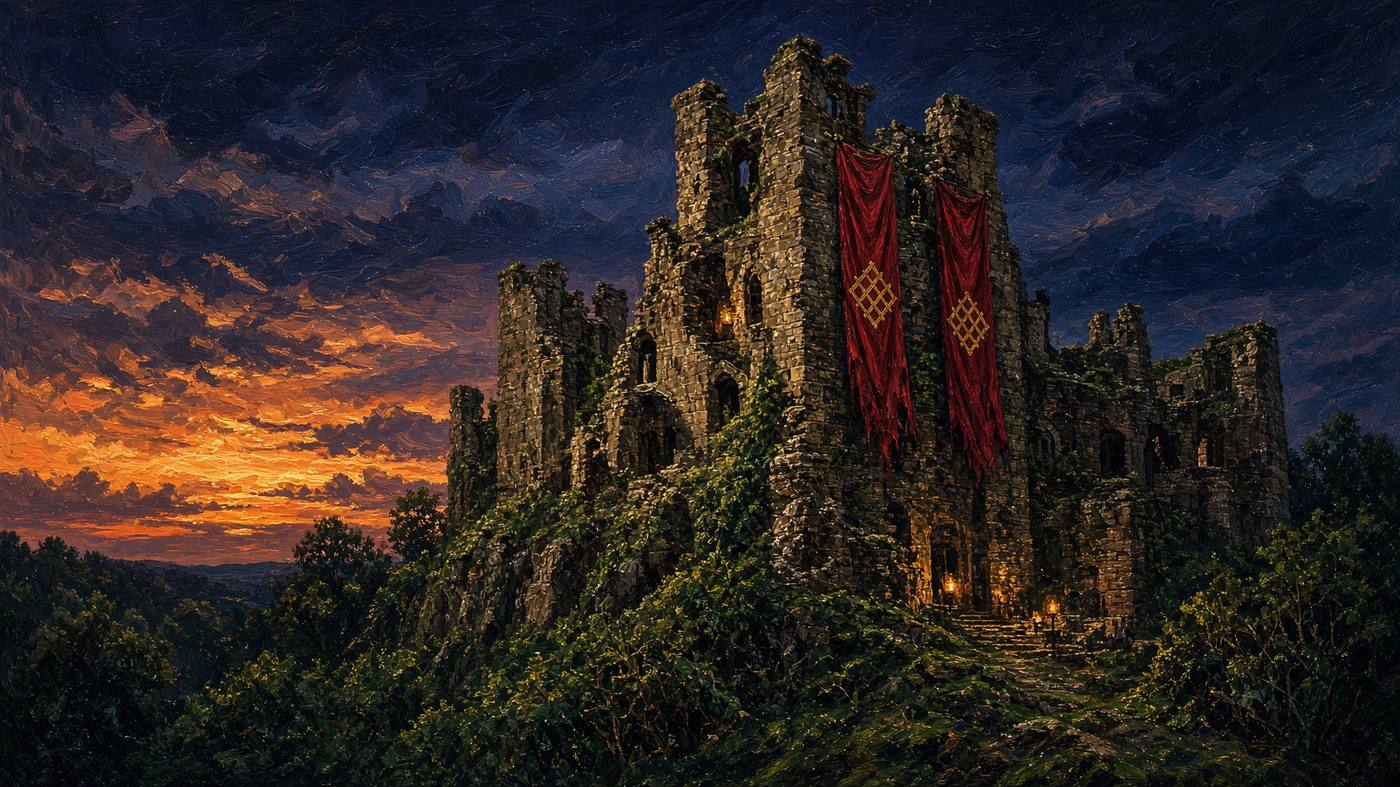
c. 1226 – ruin
Heighley Castle
Heighley (Heleigh) Castle, Madeley, Staffordshire, is the fortress Henry de Audley raised to command the Cheshire plain. It is the stone that made a writ possible. By the seventeenth century it was already a ruin; it remains archaeology, not a residence. A petitioner walks the ridge to stand in the honour, not to sleep in it.
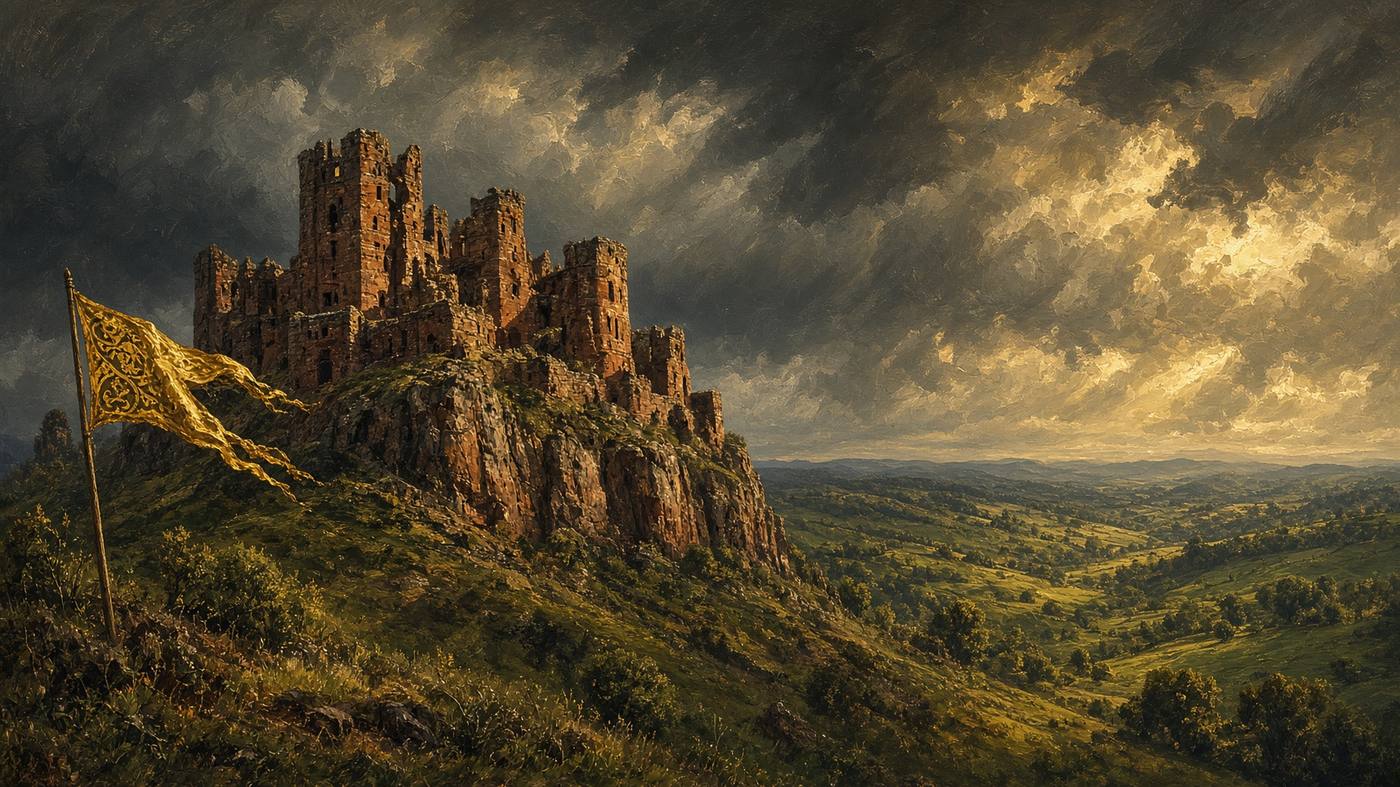
13th century
Red Castle
Red Castle on the Shropshire marches was Henry de Audley's other stone argument: a Marcher fortress in red sandstone, watching Wales. Together with Heighley it proves the family had crossed from tenant to fortress dynasty before Edward II ever wrote a writ.
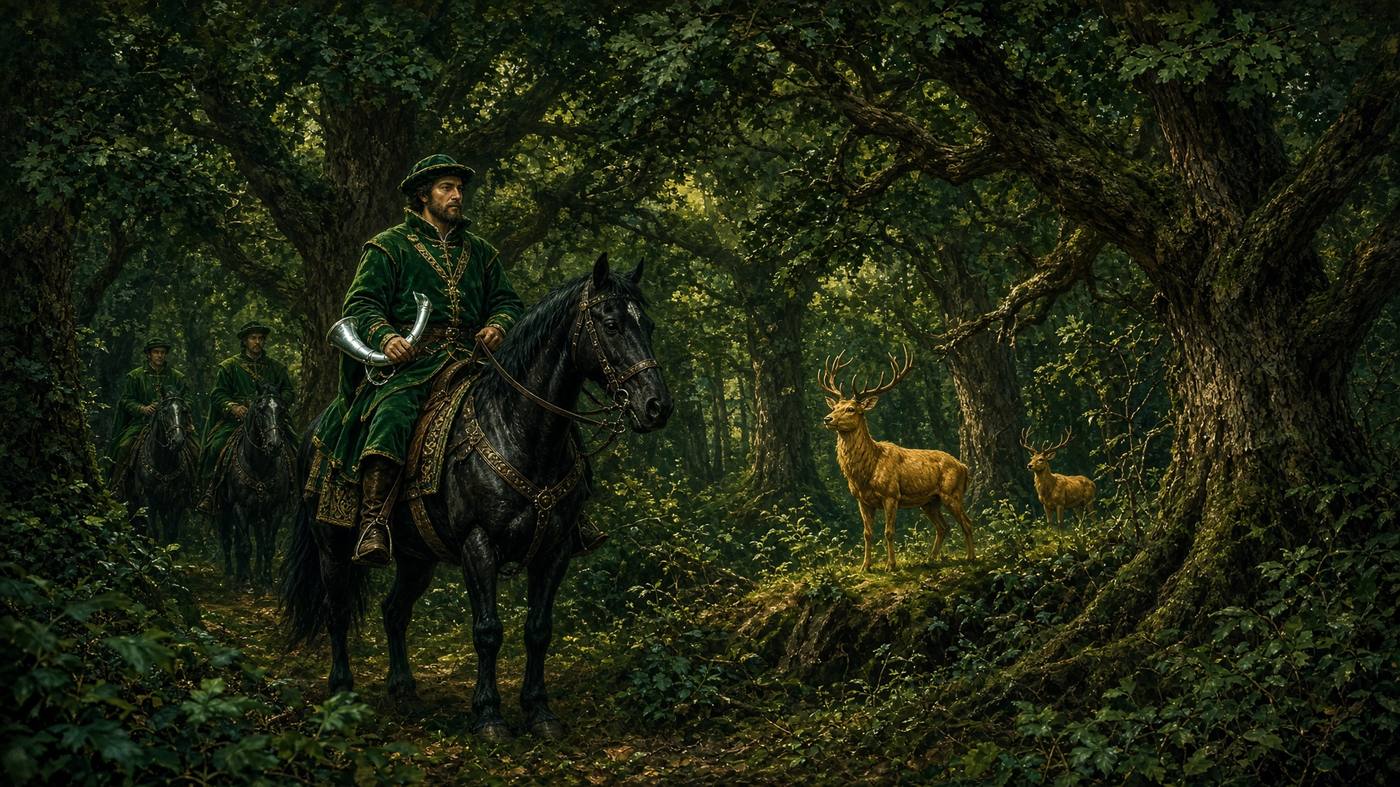
1284 – 1849
Wirral Forest & Hooton
The hereditary forestership of Wirral is where the Stanley cadet becomes visible in colour: greenwood, stag, horn. Storeton Hall received a licence to crenellate. Hooton Hall housed the Stanleys of Hooton from 1411 until 1849. The three stags' heads are not a Victorian fancy. They are a job of work in a forest.
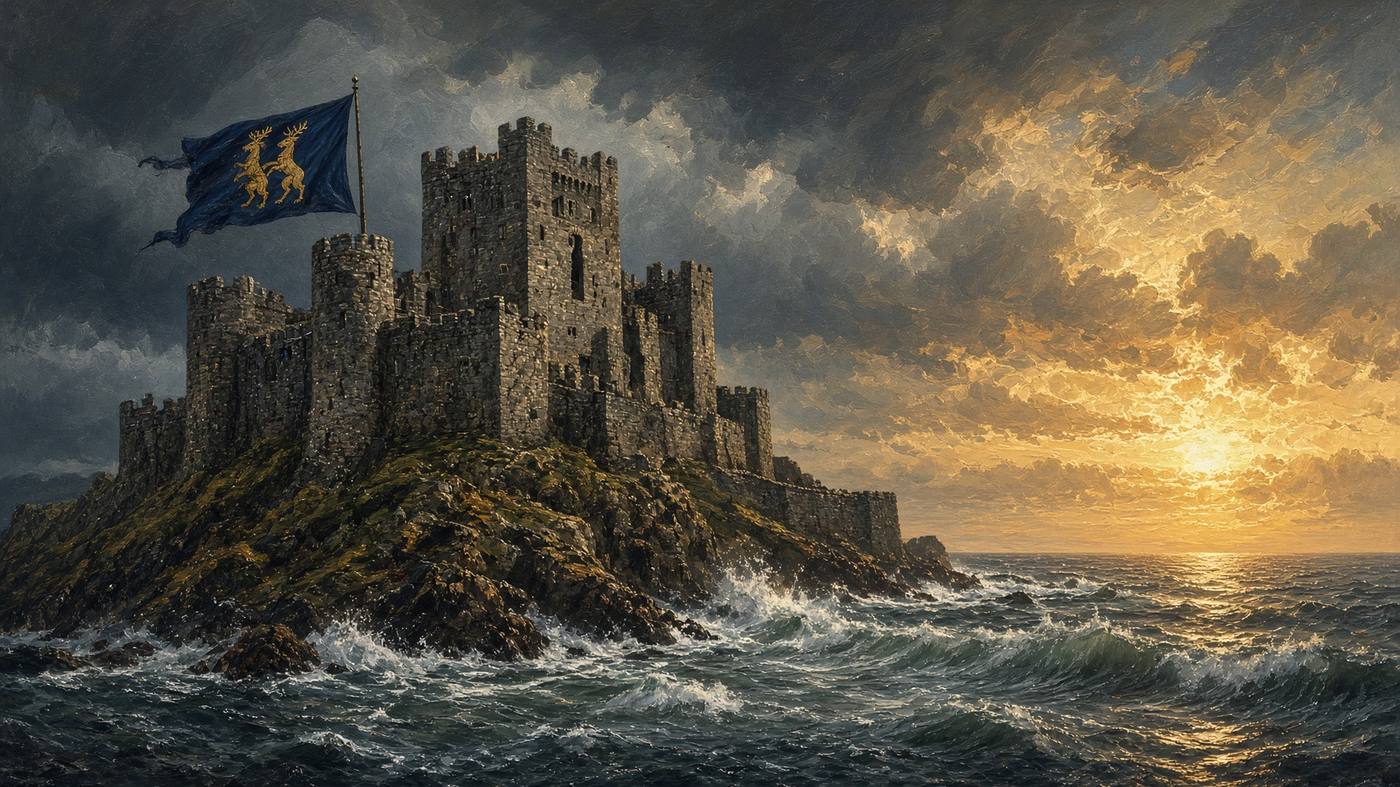
1405 –
Isle of Man
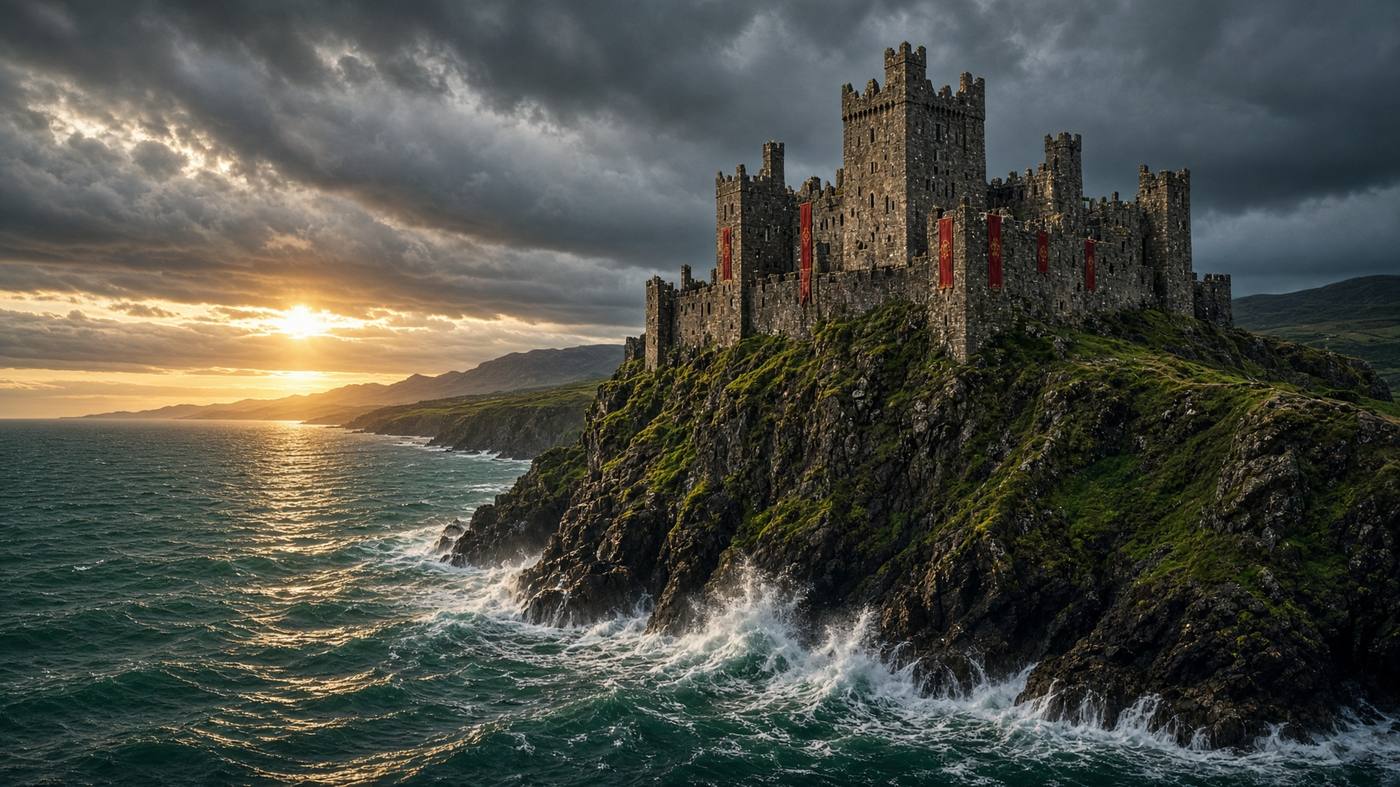
Granted to Sir John de Stanley in 1405 and made hereditary in 1406, the lordship of Mann is the cadet branch's sovereign prize. Castle Rushen and Peel on a storm sea are the architecture of a title the Audley barons never held. Two children of one 12th-century manor-swap: one becomes a baron by writ, the other a king in the Irish Sea.
1540 –
Keele & the Sneyd cadet
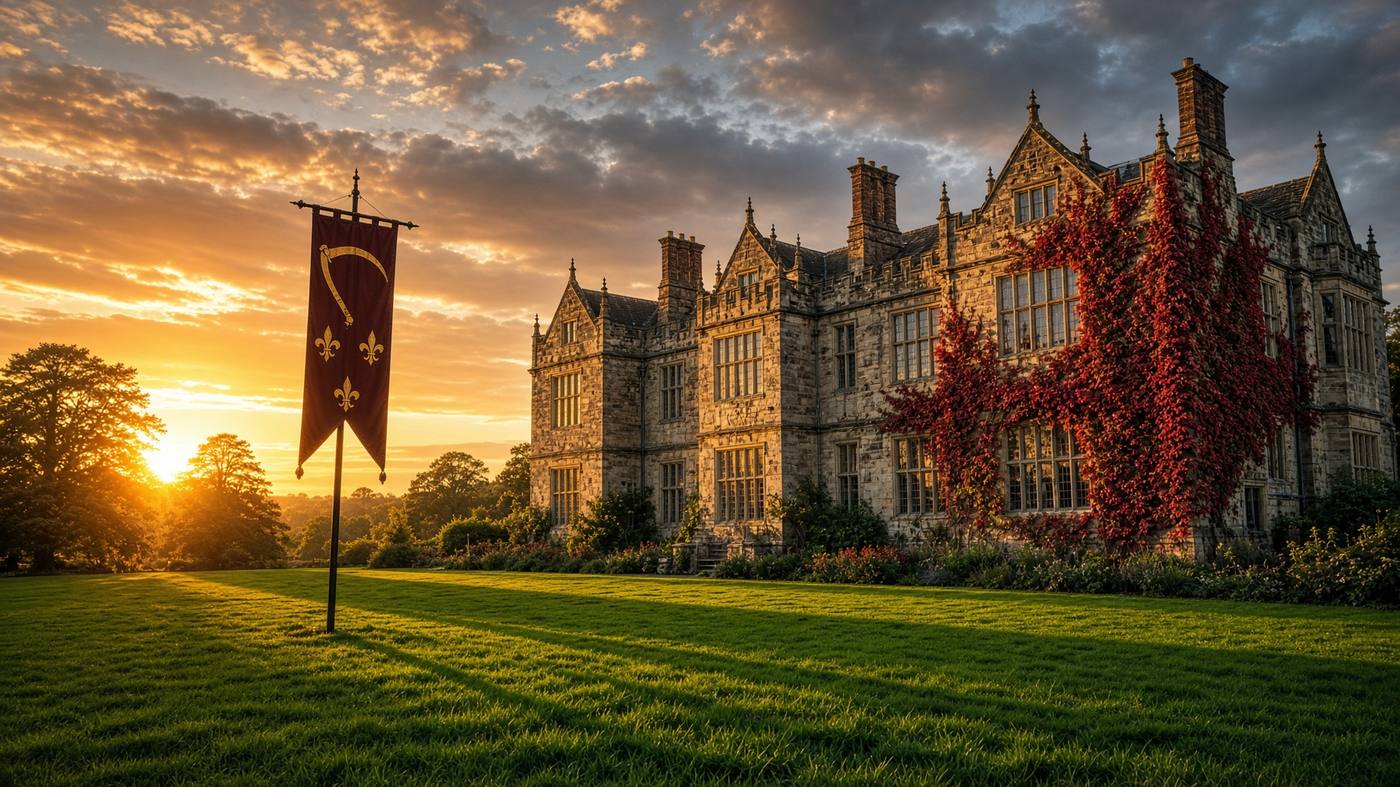
The Sneyds, a thirteenth-century cadet of the Audleys, purchased Keele from the Crown in 1540 after the Hospitallers. Ralph Sneyd built the first Keele Hall in 1580. Their scythe (a pun on sned) and fleur-de-lys (Poitiers honour, claimed for an ancestor beside James, 2nd Baron) are a heraldic affidavit of proximity — not a marshalling of the gold fret.
1616 – 1777
Castlehaven
The Irish earldom of Castlehaven (1616) was a Stuart flourish around the older English writ. It died in 1777. The English barony walked on, into Thicknesse blood. Never confuse the extinct Irish coronet with the sleeping English one.
1086 –
Audley manor & St James
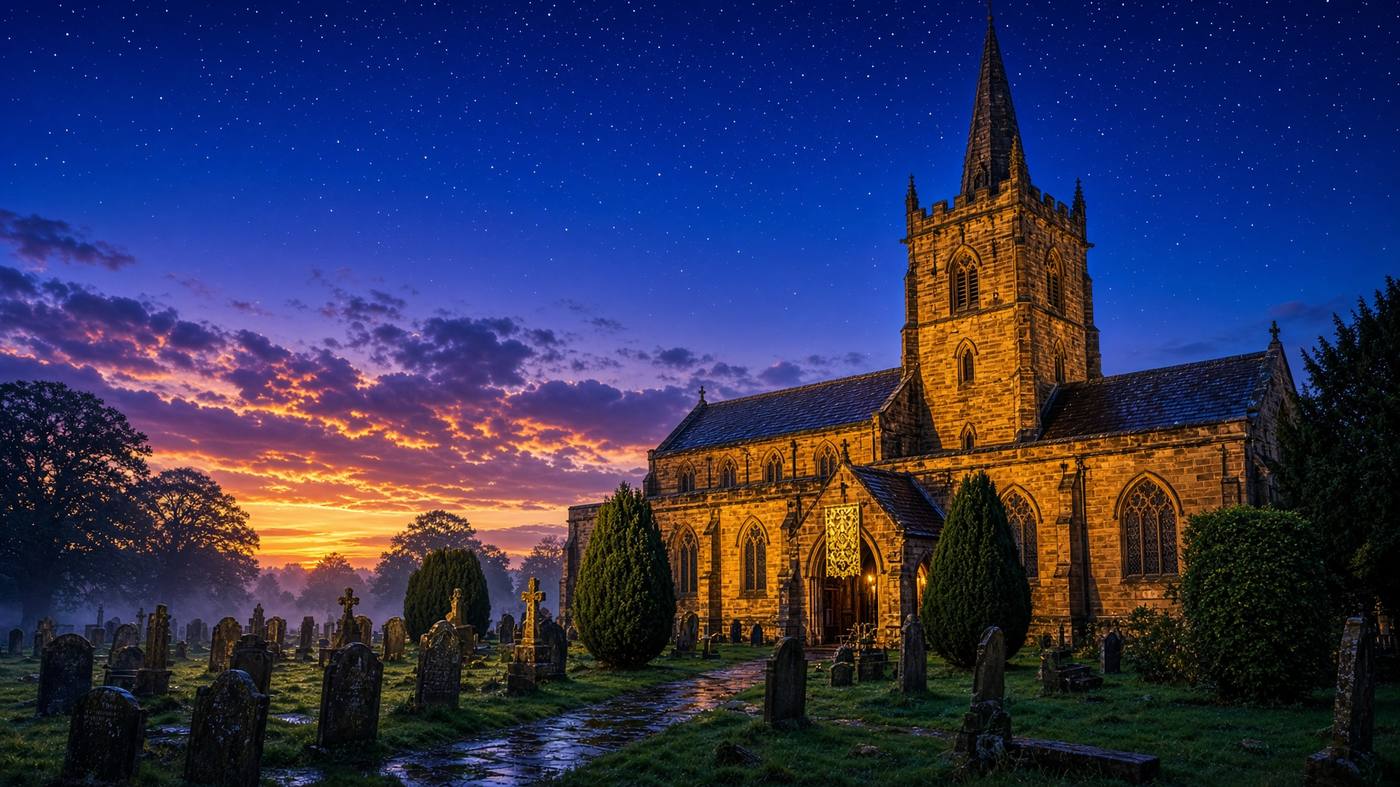
The meadow of Aldgith — Aldithley — is the dirt the whole story is named for. Domesday places Gamel here. The parish church of St James keeps the later registers in which Gamel becomes Gamble. A petitioner does not start at Westminster. A petitioner starts in this churchyard.
1223 – dissolution
Hulton Abbey
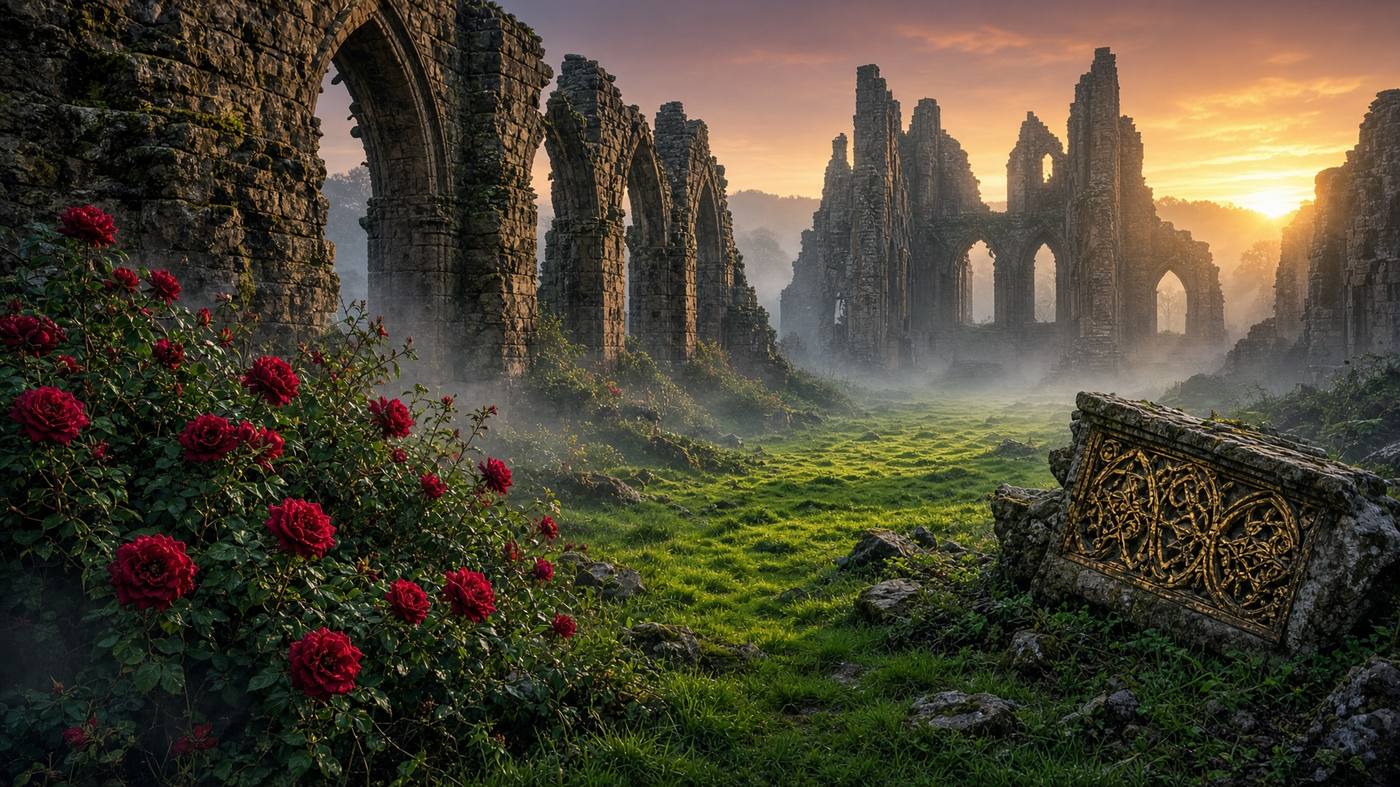
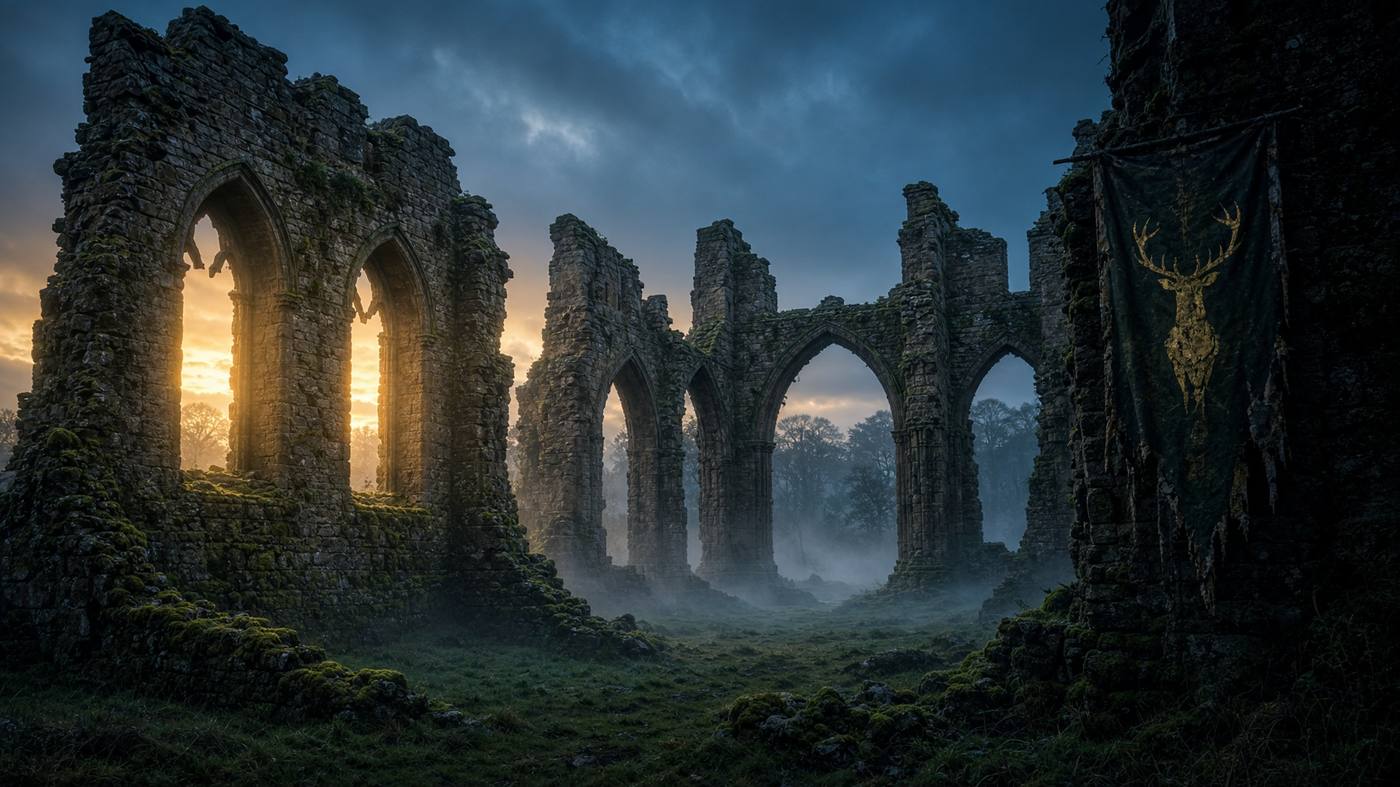
Henry de Audley founded the Cistercian abbey of Hulton in 1223. Marcher lords built monasteries as charter factories and chantries. The founder's family is named in the cartulary; the stones still hold the fret even when they are only earthworks.
c. 1190 – ruin
Burscough Priory
The Stanley kings of Mann and the first Barons Stanley were buried at Burscough Priory in Lancashire. Isabel de Lathom brought Lathom and Knowsley into the cadet; the priory is where that marriage still lies in the ground.
1385 –
Lathom & Knowsley
Sir John de Stanley's marriage to Isabel de Lathom in 1385 is the cadet's decisive territorial leap: Lathom, Knowsley, and the later earldom of Derby all hang on this Lancashire heiress. The Audley barons never held it. The other child of Aldithley did.
23 September 1459
Blore Heath
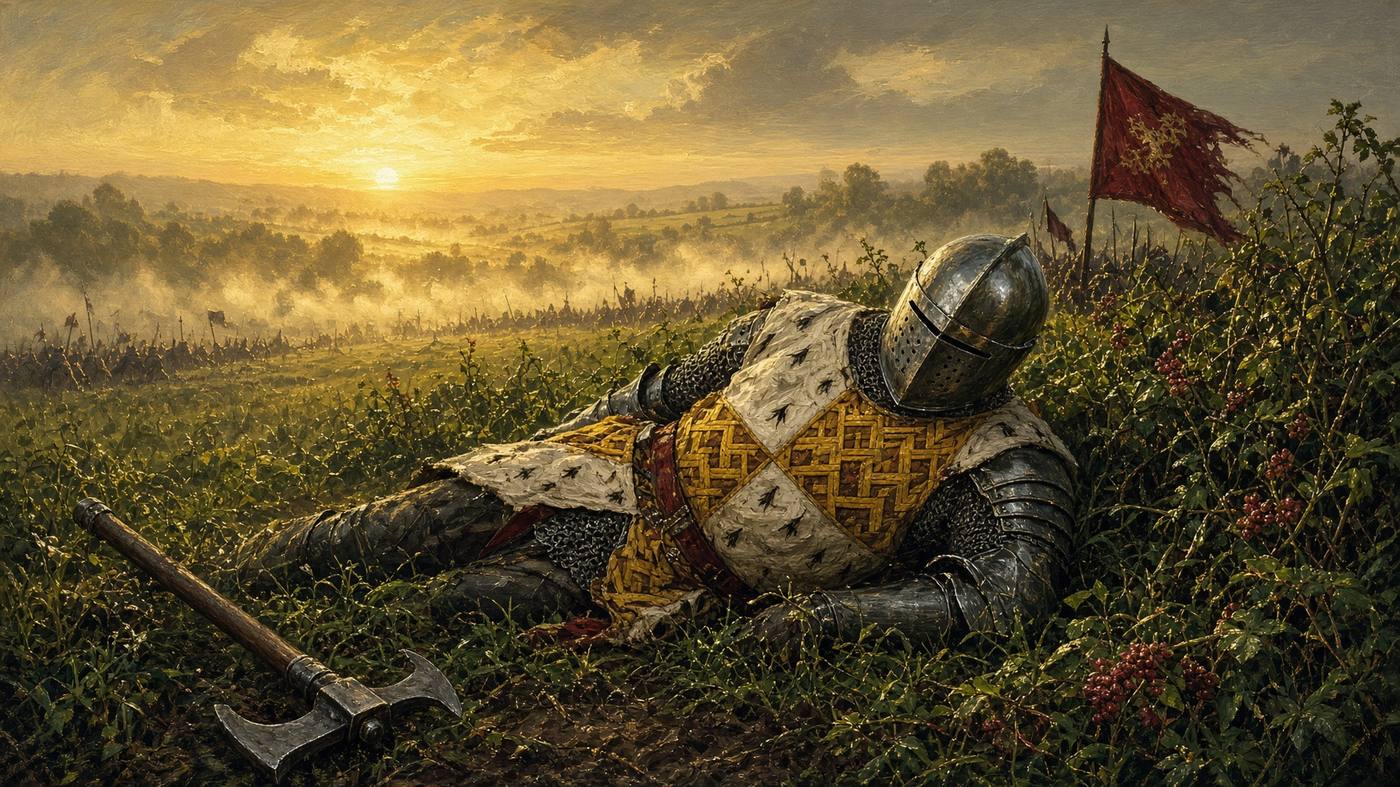
A few miles from the honour, James Tuchet, 5th Baron Audley, commanded Lancastrian forces and was killed. Yorkist victory opened the Wars of the Roses in earnest. The field is still a field. The writ walked off it with his son.
1284 –
Storeton Hall
William de Stanleigh the Elder built Storeton Hall with a royal licence for a turret and embattled walls. The forestership of Wirral is an office; Storeton is the house the office built. The three stags were granted as a distinct coat in 1316 — a legal demarcation that the cadet would no longer wear the Audley fret.