Generation 7 · plantagenet · 8 of 60 · Holds the 1313 writ
Nicholas Audley
1st Baron Audley of Heleigh
Son · husband · father of this house
Helm or circlet of rank
Use the left and right arrow keys to turn the figure.
Chronicle of this board
Writ of summons, 8 January 1313
On 8 January 1313 Edward II summoned Nicholas Audley of Heighley to Parliament. A writ of summons to a sitting, with heirs general, creates a barony in fee. So long as a traceable descendant exists, the dignity is not dead. It can sleep. It cannot, by ordinary failure of heirs male, become extinct.
This is the constitutional fact on which every later petition hangs. It is not letters patent with a remainder to heirs male of the body. It is the older, more generous, more dangerous English form: heirs general — daughters as well as sons.
Distinguish this from the 1317 creation for Hugh Audley of Stratton Audley, later Earl of Gloucester, which travelled with Stafford and died in the Buckingham attainder of 1521. The Heighley barony is the one still legally alive.
Wardrobe
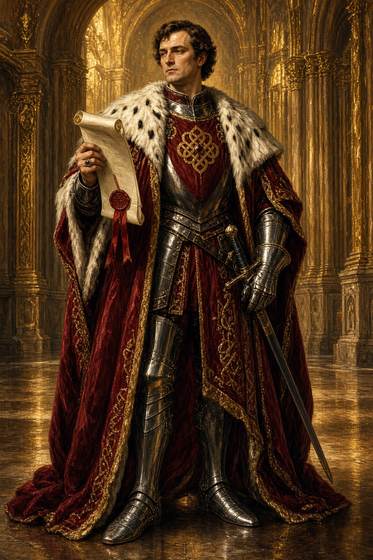
Parliamentary robe over armour — the visual invention of a baron by writ. Crimson, gold fret, ermine tippet for the parliament at Westminster.
Weapons · animals · lands
Arming sword, baronial seal, the writ itself as a legal weapon.
Palfrey to Westminster; destrier at Heighley.
- Heighley
- Audley honour